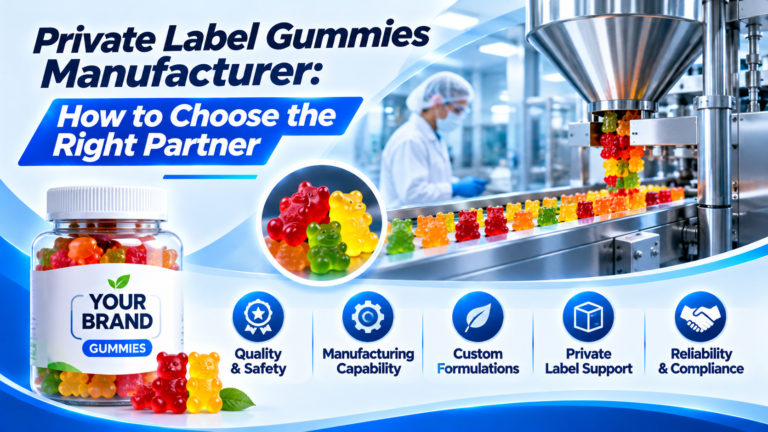
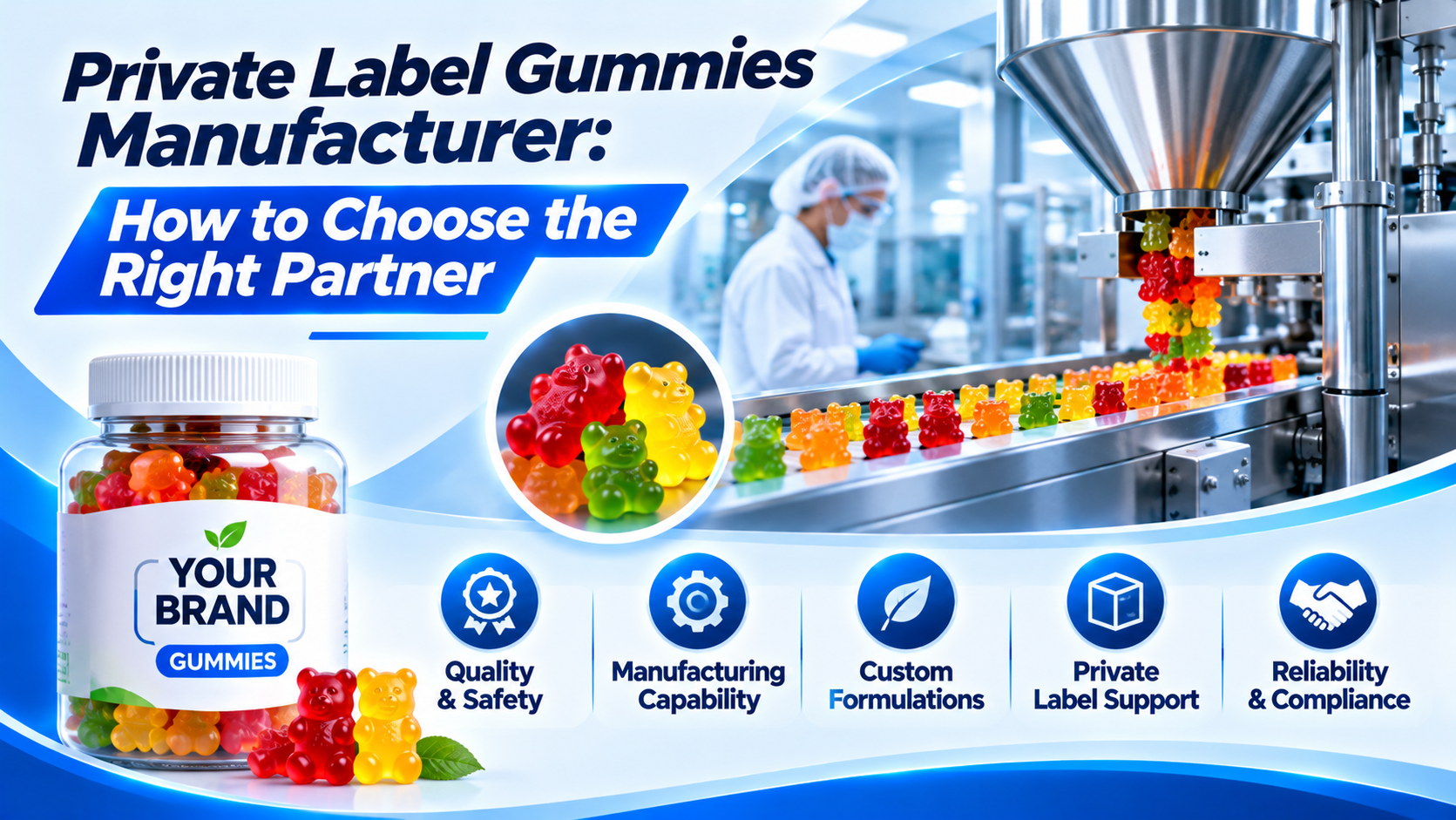
A private label gummies manufacturer develops, produces, and packages gummy supplements that you sell under your own brand. You supply the brand, the positioning, and the customer. The manufacturer supplies the formulation expertise, equipment, compliance systems, and production capacity. For emerging brands, choosing the right partner often matters more than the product idea itself, because a weak manufacturer can quietly undermine quality, margins, and customer trust.
This guide explains how private label gummy manufacturing works, what to compare between suppliers, and which questions separate a dependable partner from a risky one.
What a Private Label Gummies Manufacturer Actually Does
A private label gummies manufacturer handles the technical side of making a gummy supplement so you can focus on branding and sales. Depending on the company, that can include formulation, sourcing ingredients, production, quality testing, packaging, and label support.
The scope varies a lot between suppliers. Some only produce from a fixed menu of existing formulas. Others offer full custom development. Understanding this difference early saves you from comparing quotes that are not really comparable.
Private Label vs. White Label vs. Custom Formulation
These terms are often used interchangeably, but they describe different levels of control.
| Model | What you get | Best for | Trade-off |
|---|---|---|---|
| White label | A ready-made formula sold to multiple brands, with your label applied | Fast, low-risk launches | Little differentiation; competitors may sell the same formula |
| Private label | An existing base formula, often adjustable (flavor, color, dosage, shape) | Brands wanting some customization without long development | Moderate flexibility |
| Custom formulation | A formula developed around your specifications | Brands with a clear product concept or proprietary positioning | Longer timelines and usually higher minimums |
Many manufacturers use these labels loosely, so confirm in writing what is exclusive to you and what is shared.
Why Gummies Are Harder to Manufacture Than Capsules
Gummies are more complex because the formula has to work as both a supplement and a confection. Active ingredients must remain stable and evenly distributed inside a gel matrix, while the finished product still needs acceptable taste, texture, and shelf life.
Several practical challenges explain why experience matters:
- Active ingredient limits. A gummy can only hold so much active material before texture and taste suffer. Ingredients that are easy in a capsule, such as high-dose minerals or bulky powders, can be difficult in a gummy.
- Taste and flavor masking. Some ingredients taste bitter or chalky and need careful flavor and acid systems.
- Stability. Heat, moisture, and the gel base can degrade certain vitamins over time. Manufacturers often add an overage (extra active ingredient) so the product still meets its label claim at the end of shelf life. The right overage depends on the ingredient and should be based on stability data, not guesswork.
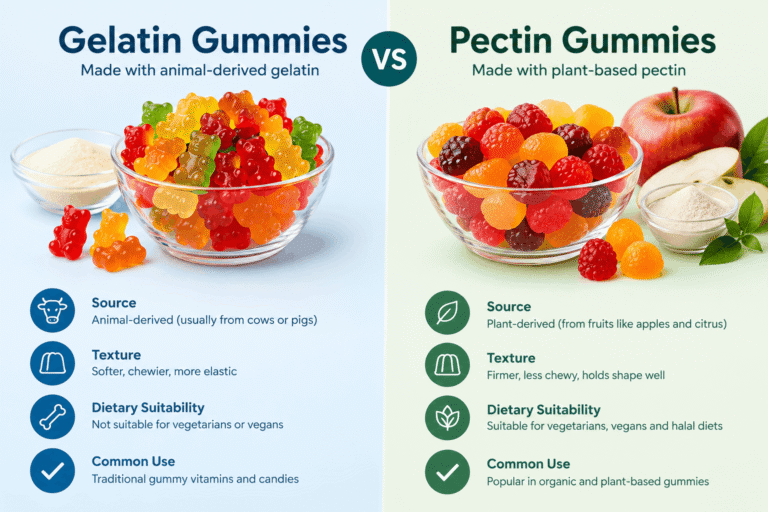
- Texture. Gelatin and pectin behave differently. Pectin-based gummies are common for vegan and vegetarian positioning, but they require different processing than gelatin-based products.
- Sticking and humidity. Finished gummies are sensitive to moisture, so coating, curing, and packaging choices directly affect quality.
A manufacturer who talks openly about these constraints is usually more trustworthy than one who promises that any ingredient, at any dose, will work.
How the Private Label Gummy Process Works, Step by Step
Most projects follow a similar sequence, although timelines vary by manufacturer and complexity.
- Define the product concept. Decide the target customer, the benefit category (for example, general wellness, sleep support, or hair, skin, and nails), and the claims you intend to make.
- Choose the formula path. Select a white label, private label, or custom route based on budget, timeline, and differentiation goals.
- Review the formulation. Confirm active ingredients, serving size, number of gummies per serving, sweetener type, allergens, and dietary attributes such as vegan or gluten-free.
- Approve samples. Taste, texture, color, and appearance should be evaluated by more than one person. Ask whether samples represent real production conditions.
- Finalize packaging and labeling. Bottles, pouches, labels, and the Supplement Facts panel need to be designed and reviewed for regulatory accuracy.
- Place the production order. Confirm MOQ, pricing, deposit terms, and lead times in writing.
- Production and quality control. The batch is made, tested, and released according to the manufacturer’s quality procedures.
- Documentation and delivery. Request batch documentation such as a certificate of analysis, then arrange shipping to your warehouse or fulfillment partner.
What to Compare When Evaluating Manufacturers
The best private label gummies manufacturer for your brand is the one whose quality systems, flexibility, and economics fit your stage of growth. Price should be one factor, not the deciding factor.
Quality Systems and Compliance
In the United States, dietary supplements are regulated by the FDA under the Dietary Supplement Health and Education Act (DSHEA), and manufacturers are expected to follow current Good Manufacturing Practice requirements for supplements (21 CFR Part 111). A credible manufacturer should be able to explain how it meets these requirements.
Ask about:
- Facility registration with the FDA
- cGMP practices and any third-party GMP audits or certifications
- Identity, purity, and potency testing for raw materials and finished products
- Certificates of analysis for each batch
- Allergen control and cross-contamination procedures
- Recall and traceability procedures
Remember that you, as the brand owner, also carry responsibility for the product you sell. A strong manufacturer reduces risk but does not remove your obligations around labeling and claims.
Formulation Support
Good formulation support means a technical team that can advise on what will and will not work in a gummy. Look for a manufacturer that can discuss ingredient compatibility, serving size, sugar versus sugar-free systems, and stability, rather than simply accepting any request.
If you are building a differentiated product, ask whether the formula can be exclusive to your brand and who owns the formulation.
MOQs, Pricing, and Lead Times
Emerging brands should compare minimum order quantities carefully, because MOQs determine how much cash is tied up in inventory. Lower MOQs reduce launch risk, but per-unit pricing is often higher. Higher MOQs usually reduce unit cost but require more confidence in demand.
When comparing quotes, make sure each one specifies:
- Price per bottle at several quantity tiers
- What is included (formula, packaging, labels, testing, shipping)
- Setup, tooling, or sample fees
- Typical lead time from approved sample to finished goods
- Reorder minimums, which may differ from first-order minimums
A low headline price that excludes packaging or testing can end up costing more than a higher, more complete quote.
Packaging, Labeling, and Supply Chain
Packaging affects shelf life as well as appearance. Gummies need moisture-resistant packaging, and the choice of bottle, closure, and desiccant can influence quality over time. Ask whether the manufacturer offers label design support, Supplement Facts panel review, and flexible packaging formats for retail, Amazon, or direct-to-consumer sales.
Also ask how the company handles ingredient shortages or supplier changes, since gummy-specific inputs such as pectin, flavors, and certain actives can be subject to supply disruption.
Gummy Format Decisions That Affect Cost and Quality
The format choices you make before production shape both the customer experience and your margins. Key decisions include:
- Pectin or gelatin. Pectin supports vegan and vegetarian positioning. Gelatin is animal-derived and may suit different markets. Each has its own processing behavior.
- Sugar or sugar-free. Sugar-free gummies often use sugar alcohols or other sweeteners, which can affect taste and digestive tolerance in some consumers. Review the full ingredient list and labeling requirements.
- Serving size. More gummies per serving allows higher dosing but raises cost per serving and may reduce compliance.
- Shape and color. Custom shapes and natural colors can strengthen branding but may add tooling cost and processing limits.
- Dietary claims. Claims such as vegan, non-GMO, gluten-free, or allergen-free require supporting documentation. Do not rely on a manufacturer’s verbal assurance alone.
Red Flags When Vetting a Manufacturer
A few warning signs deserve extra scrutiny before you commit:
- Unwillingness to discuss testing, certificates of analysis, or quality procedures
- Promises that every ingredient and dose is possible in a gummy
- Vague answers about who actually manufactures the product, since some companies resell production from other facilities
- No clear policy on formula ownership or exclusivity
- Pressure to approve samples or pay deposits quickly
- Health claims suggested for your label that sound like disease treatment, which can create regulatory risk
A professional manufacturer should welcome detailed questions.
Final Thoughts and Next Steps
Choosing a private label gummies manufacturer comes down to quality systems, honest formulation guidance, and terms that fit your stage of growth. Before requesting quotes, define your product concept, target serving size, dietary positioning, and budget so suppliers can respond with comparable proposals.
If you are an emerging brand evaluating options, shortlist two or three manufacturers, request samples and documentation, and use the questions above to compare them side by side. When you are ready to discuss your own gummy project, contact the manufacturer directly with your formula idea, target quantity, and launch timeline so they can advise on feasibility and next steps.
FAQs
What is a private label gummies manufacturer?
A private label gummies manufacturer produces gummy supplements that you sell under your own brand name. The manufacturer typically handles formulation, production, testing, and packaging, while you handle branding, marketing, and sales.
What is the difference between white label and private label gummies?
White label gummies use a ready-made formula that may be sold to several brands, while private label usually allows more customization, such as flavor, dosage, or shape. Custom formulation goes further, with a formula built around your specifications. Confirm exclusivity in writing.
What is a typical minimum order quantity for private label gummies?
MOQs vary widely by manufacturer, formula type, and packaging, so there is no single standard. Ask each supplier for first-order and reorder minimums, and compare per-unit pricing at several quantity tiers.
How long does it take to launch a private label gummy product?
Timelines depend on whether you choose an existing formula or a custom one, plus sample revisions, packaging, and production scheduling. Custom projects generally take longer than white label products. Ask for a written timeline from sample approval to delivery.