Choosing a factory is the biggest decision you will make when you launch a supplement brand. The right partner protects your customers, your reputation, and your margins. The wrong one can lead to failed batches, delayed launches, and money lost.
China is now one of the world’s largest hubs for private label supplements, offering strong production capacity, modern equipment, and competitive pricing. But quality varies a lot between factories. This guide shows you how to find a reliable private label supplement manufacturer in China, step by step, and which warning signs to avoid.
Why Brands Choose China for Private Label Supplements
More and more emerging brands source private label supplements from China, and the reasons are practical:
- Wide product range: gummies, capsules, softgels, tablets, liquid drops, jelly sticks, and powders can often be made in one place.
- Competitive costs: large-scale production and local raw material supply keep unit prices lower.
- OEM/ODM support: many factories offer ready-made formulas as well as full custom development.
- Growing quality standards: top factories now hold international certifications and run cleanroom production.
The key is separating professional manufacturers from simple trading companies. The steps below will help you do that.
Step 1: Verify the Manufacturer’s Certifications
Certifications are the first filter. A serious private label supplement manufacturer in China should be able to show valid, current documents, not just logos on a website.
Look for:
- GMP (Good Manufacturing Practice): proves the factory follows controlled production and hygiene standards. NSF/ANSI 455-2 is a respected standard for dietary supplements.
- HACCP: a food safety system that identifies and controls hazards during production.
- FSSC 22000: a recognized food safety management certification.
- Halal: important if you plan to sell in Muslim-majority markets.
- FDA facility registration: required for facilities exporting food products, including supplements, to the United States.
Ask for copies of the certificates and check the issue dates, the factory name, and the scope. The company name on the certificate should match the company you are contracting with. To see which certificates a GMP-built factory can show, review YOUDI’s quality and certifications page.
Step 2: Ask for Third-Party COAs
A Certificate of Analysis (COA) shows what is actually inside your product. Reliable manufacturers can provide third-party COAs that cover active ingredient content and key quality parameters such as heavy metals and microbial limits.
Before you commit, ask:
- Do you provide a COA for every batch?
- Is the testing done by an independent laboratory?
- Can I see a sample COA for a product similar to mine?
If a factory hesitates or only offers in-house reports, treat that as a warning sign.
Step 3: Check MOQ and Pricing Flexibility
Minimum order quantity (MOQ) is a major issue for new brands. Many factories ask for thousands of units per product, which is risky when you have not tested the market yet.
The best manufacturers for startups offer flexible routes. For example:
- Sample pack: check quality before buying stock.
- White label, from around 100 bottles: launch fast with neutral stock and your own label.
- Shared MOQ batches: join a production run with other brands and get near-bulk pricing without ordering a full batch yourself.
- Full customization, 500+ bottles: move to your own formula and packaging as sales grow.
A manufacturer that supports this path lets you start small and scale with real demand, which lowers your launch risk. YOUDI, for instance, offers low-MOQ production from 100 units per brand through its shared batch model.
Step 4: Order Samples Before Committing
Never approve a bulk order on a brochure alone. Samples let you check taste, texture, color, dosage, and packaging quality in person.
When reviewing a sample, check:
- Taste and aftertaste (especially for gummies and powders)
- Texture, stickiness, and shape consistency
- Label accuracy and print quality
- Packaging seals and bottle quality
- Whether the ingredients match your specification
It is smart to test the sample with a few trusted customers or friends and collect honest feedback before placing a larger order.
Step 5: Review Formulation and Customization Support
A good manufacturer does more than fill bottles. Look for a team that can advise on formula design, ingredient sourcing, dosage, and stability.
Useful questions include:
- Do you offer ready-made formulas and custom formulation?
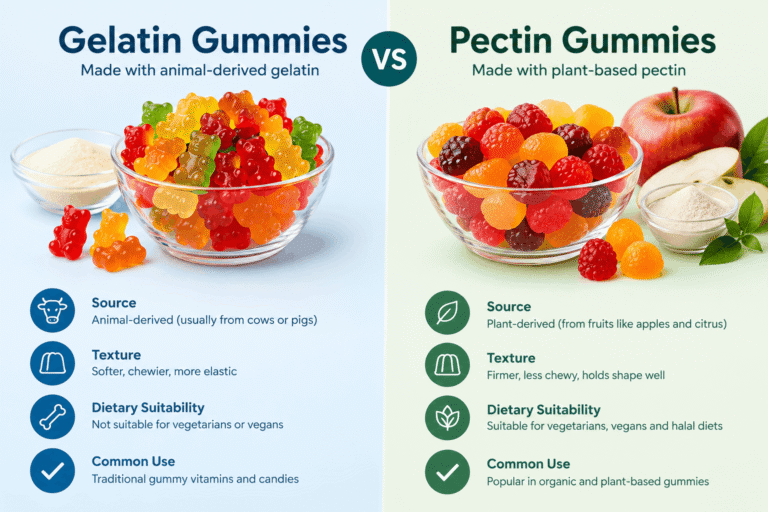
- Can you make vegan, gelatin-free, or sugar-free options?
- Which dosage forms can you produce in-house?
- Can you suggest improvements to my formula?
For example, pectin-based gummies sweetened with stevia or monk fruit suit brands targeting vegan and sugar-conscious customers. A factory with this experience can save you months of trial and error.
Step 6: Audit the Facility
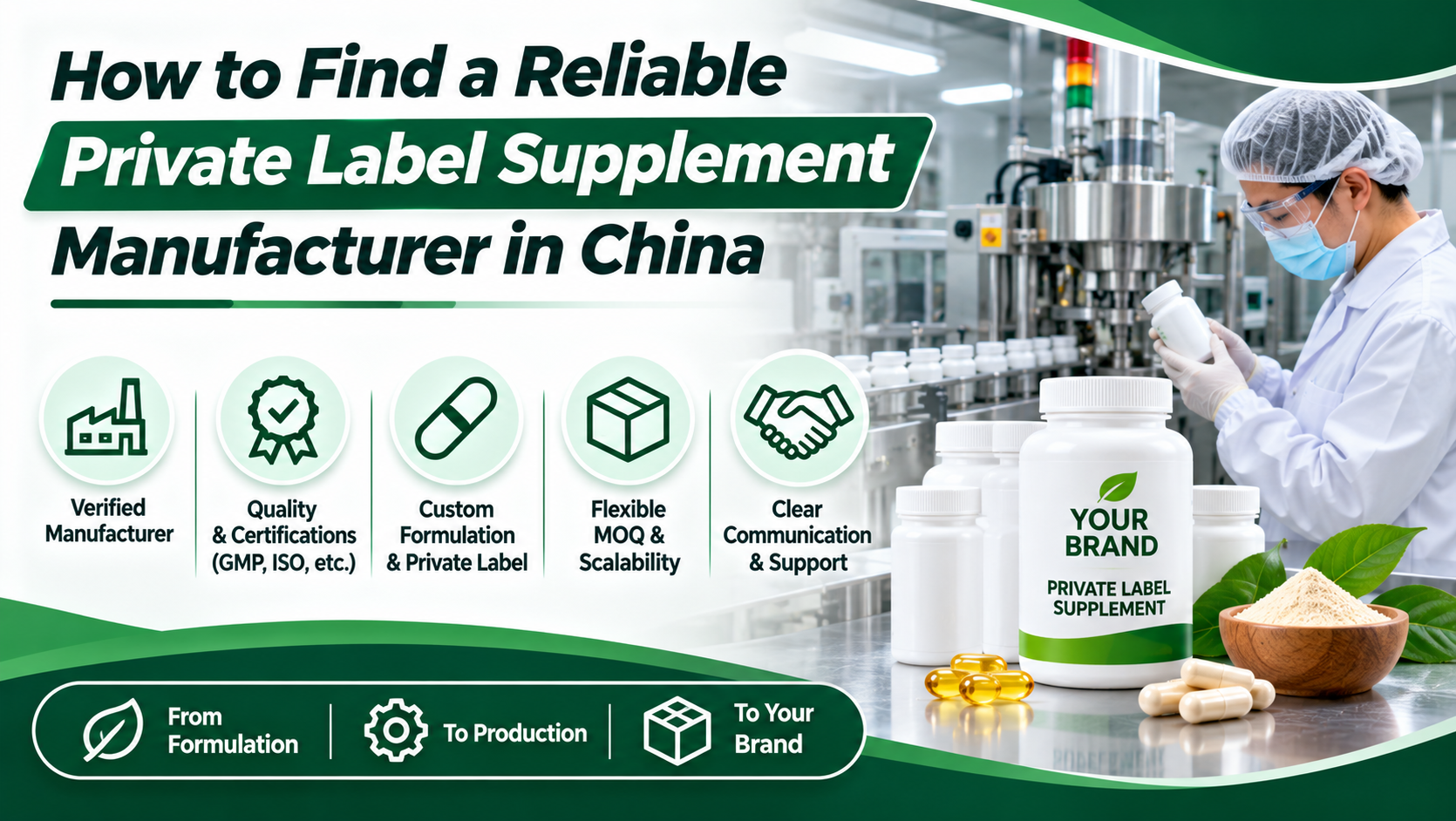
Seeing the factory is the best way to build trust. If you cannot visit in person, ask for a live video tour or a third-party inspection. To see what a GMP cleanroom production floor looks like, visit YOUDI’s manufacturing page.
A professional facility will usually have:
- A clean, GMP-built production floor with controlled access
- Clearly separated stages for mixing, filling, quality checks, and packing
- In-process quality control, not just a final check
- Batch traceability from raw materials to finished goods
If a supplier cannot show real photos or video of their production line, they may be a trading company that outsources the work to unknown factories.
Step 7: Test Communication and Transparency
How a supplier communicates before the sale is usually how they will behave after it. Reliable partners respond quickly, answer questions directly, and give clear timelines and written quotes.
Pay attention to:
- Response time on WhatsApp or email
- Clear English communication and detailed answers
- A written quotation that lists price, MOQ, lead time, and payment terms
- Willingness to put quality expectations in a contract
Red Flags to Avoid
Walk away, or at least dig deeper, if you notice any of these:
- The supplier cannot show certificates, or the names do not match
- No third-party COAs are available
- Prices are far below every other quote
- The factory refuses samples, video tours, or audits
- Vague answers about ingredients, sourcing, or testing
- Pressure to pay a large deposit immediately
Frequently Asked Questions
Is it safe to buy private label supplements from China?
Yes, it can be, if you choose a certified manufacturer. Verify GMP and food safety certificates, request third-party COAs, and order samples first. Safe sourcing depends on the factory you pick, not on the country.
What is the minimum order for private label supplements in China?
It varies widely. Some factories require thousands of units, while others offer white label or shared batches from about 100 units per brand. Always confirm MOQ for each product format. You can find more answers on the YOUDI FAQ page.
How long does private label supplement production take?
White label orders can be fast, often a few weeks including labeling. Custom formulas take longer because of development, sampling, and approval. Ask for a written timeline before you pay.
Final Thoughts
Finding a reliable private label supplement manufacturer in China takes some research, but it pays off. Verify certifications, demand third-party COAs, start with samples, choose a flexible MOQ, and confirm that the factory is real. A partner who offers all of this will help you grow safely from a first test batch to full production.
Ready to start your own supplement line? Contact the YOUDI team to discuss formats, formulas, and low-MOQ options for your brand.